Kisaju, Kajiado CountyMon – Sat, 8 AM – 5 PM

Maxlyte 11 Insulating Castable 1300°C

  • Insulating castable
  • Lightweight
  • 1300°C

Maxlyte 11 is the insulating castable: a lightweight aggregate rated to 1300°C. It goes in the back-up layer behind the hot face, where the job is to hold heat in rather than resist it.

Because the aggregate is light, it cuts wall heat losses and lining weight together. It is not the hot-face material for high temperatures; that is what Maxheat A and Maxheat K are for. Supplied in 25 kg bags.

Request a QuoteAsk on WhatsApp

Prices are quoted, not published. What the price of refractory cement and castables depends on, and what to send us.

Used for

  • Back-up and insulating layers
  • Furnace and kiln wall insulation
  • Lightweight cast linings

Request the technical data sheet for Maxlyte 11 Insulating Castable — 1300°C.

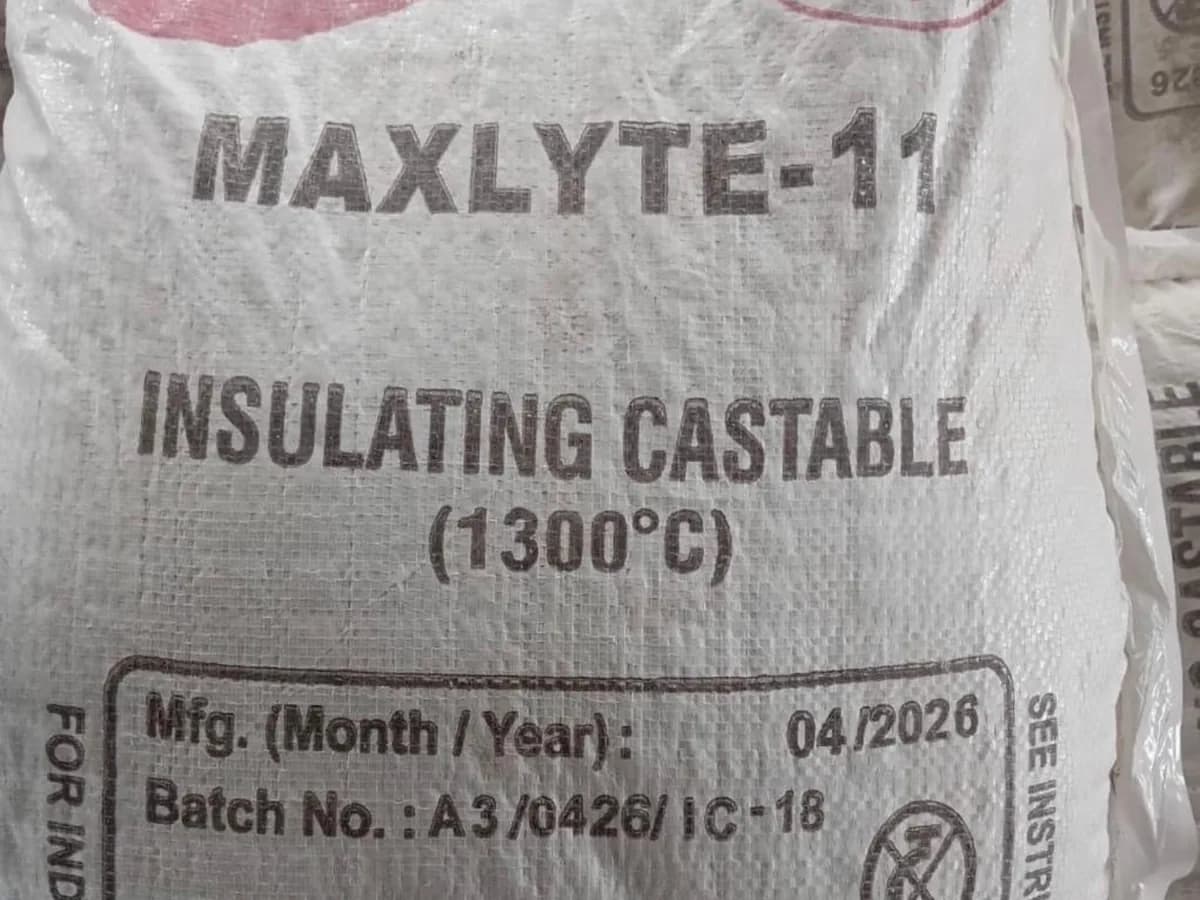
25 kg Mahakoshal sack printed Maxlyte-11 insulating castable, 1300°C
Type
Insulating castable, lightweight aggregate
Max service temperature
1300°C
Pack
25 kg bag
Density & strength
Not published — ask

The rating and pack size are those printed on the sack. Maxlyte 11 is not on the dense-castable data sheet held here, so no density, strength or chemistry figure is published for it — ask before specifying this grade to one.

Sizes stocked

1 size on the stock list. Ask for anything not listed and we will quote to your specification.

  • Insulating Castable Cement Maxlyte 11 1300°C 25kgs

About Maxlyte 11 Insulating Castable — 1300°C

An insulating castable is a different job

Maxlyte 11 is made on a lightweight aggregate, so it insulates where the dense castables conduct. Rated to 1300°C, it goes behind the hot face to keep heat off the shell — the same role insulating firebrick plays in a built lining.

It does not substitute for Maxheat A or K at the face. Lightweight aggregate is what makes it insulate and also what stops it taking the duty a dense castable takes.

What is not published, and why that is said plainly

The rating and the pack size are what is printed on the sack. Maxlyte 11 is not on the dense-castable data sheet held here, so there is no density, no strength and no chemistry to publish for it.

That absence is the specification problem. Ask and we will request the sheet from the supplier before you commit a lining to it.

  • Bulk density and cold crushing strength.
  • Chemistry and alumina content.
  • Water ratio for casting.
  • Permanent linear change and maximum grain size.

Questions we get asked

How much water does it take?
Not published here, and we will not guess at it. Water ratio is the figure that decides whether a castable reaches its strength, so for this one ask us to get the supplier's sheet before the mixer starts.
Can it go at the hot face?
It is rated to 1300°C, which is a real figure, but it is an insulating castable and belongs behind a dense face. Tell us the hot-face temperature and what is in front of it and we will confirm the build.

Castable grades: which one?

GradeRated toChoose it for
Maxheat A Castable, 1750°C1750°CThe hottest hot faces: complex shapes and repairs where brick cannot be coursed.
Maxheat K Castable, 1600°C1600°CGeneral-duty linings and repairs up to 1600°C.
Maxlyte 11 Insulating Castable1300°CBack-up layers behind the hot face, to cut heat loss and weight.
Maxset 50 Refractory Mortar, 1500°C1500°CJointing and bedding firebrick, where the brickwork does the work and the mortar holds the course.
Fondu Max-50 Cement, 1000°C1000°CMixing your own refractory concrete, and where a fast set matters more than peak temperature.
Expanded Vermiculite, 1100°C1100°CFilling a cavity or a flue, where the fill insulates and carries no load.

Send us your material list

A specification, a BOQ or a photo of the label on the old stock is enough to start. We reply with an itemised quotation.

Or call or WhatsApp 0722 293 517