Kisaju, Kajiado CountyMon – Sat, 8 AM – 5 PM

Maxheat A Refractory Castable 1750°C

  • Dense castable
  • 88% Al₂O₃ min
  • 1750°C

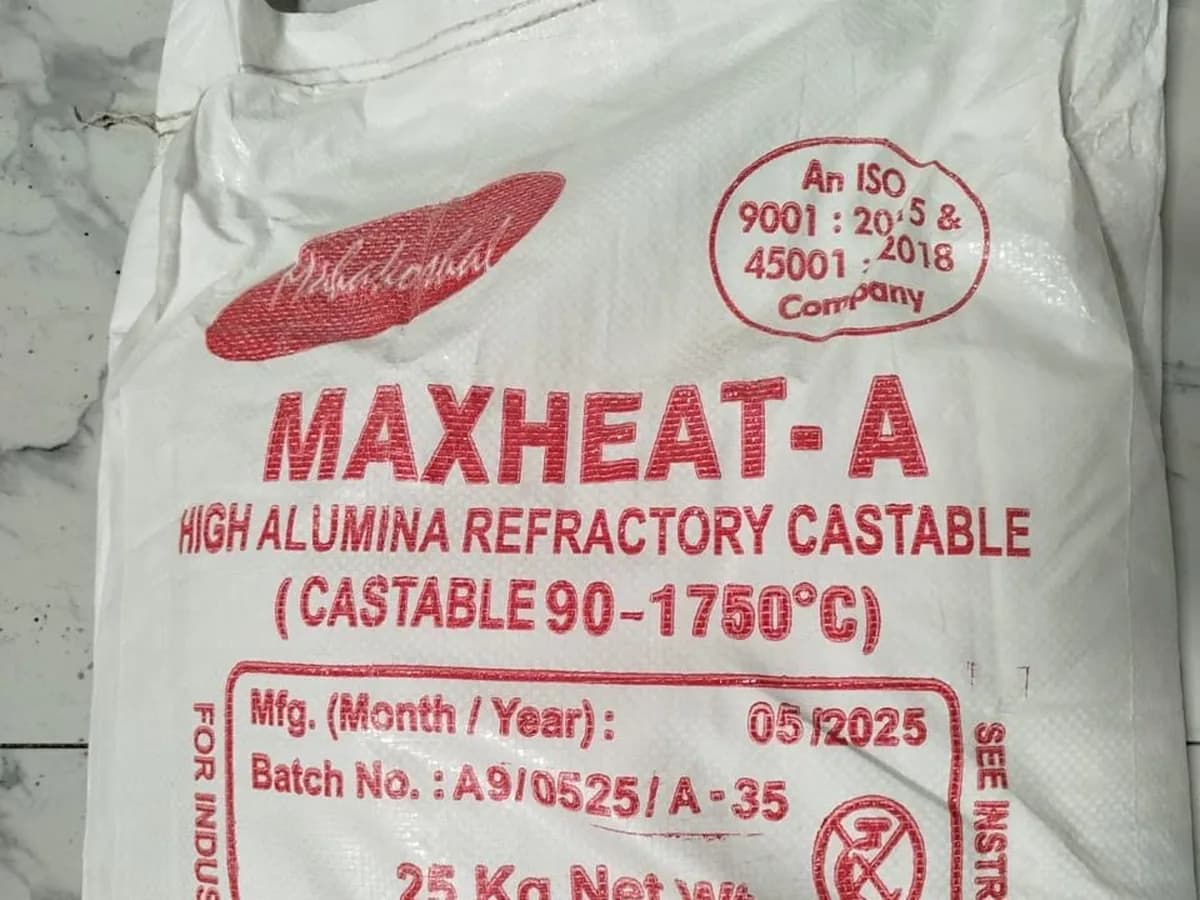
Maxheat A is the high-alumina dense castable in the range, rated to 1750°C maximum service temperature. It is what most buyers mean when they ask for Maxheat A refractory cement or fire cement: a dry mix cast in place with water, not a jointing mortar. It is cast rather than laid, so it goes where brick cannot be coursed, into complex shapes and repairs to an existing lining.

The sack is printed Castable 90. That is the grade designation, not a guarantee: the figure the manufacturer warrants is 88% Al₂O₃ minimum, and that is the number to specify against.

For general-duty work at lower temperatures, Maxheat K at 1600°C is the alternative. For an insulating back-up layer behind the hot face, use Maxlyte 11. Supplied in 25 kg bags.

Request a QuoteAsk on WhatsApp

Prices are quoted, not published. What the price of refractory cement and castables depends on, and what to send us.

Used for

  • Furnace and kiln hot-face linings
  • Complex cast shapes
  • Refractory repairs and patching

Request the technical data sheet for Maxheat A Refractory Castable — 1750°C.

25 kg Mahakoshal sack printed Maxheat-A high alumina refractory castable, Castable 90 – 1750°C
Type
Dense refractory castable
Alumina
88% Al₂O₃ minimum
Iron oxide
1.0% Fe₂O₃ maximum
Max service temperature
1750°C
Refractoriness
1820°C minimum
Bulk density
2700 kg/m³ min, dried 110°C / 24 h
Cold crushing strength
600 kg/cm² at 110°C
Permanent linear change
±1.50% at 1550°C, 3 h
Maximum grain size
5.0 mm
Water for casting
7.5 – 8.5%
Pack
25 kg bag

Figures from the Mahakoshal Refractories data sheet for high-purity dense castables, tested to BIS 10570-1983. Ask for the sheet itself if you are specifying against it.

Sizes stocked

1 size on the stock list. Ask for anything not listed and we will quote to your specification.

Working out quantities? Use our fire brick and castable calculator to see how many bags fill your area and thickness.

  • Refractory Castable Cement Maxheat A 1750°C 25Kgs Bag

About Maxheat A Refractory Castable — 1750°C

Maxheat A against Maxheat K, from the data sheet

Both are Mahakoshal dense castables in 25 kg bags with a 5.0 mm maximum grain. Every figure below is from the same data sheet, so the two columns compare like with like.

  • Alumina: 88% Al₂O₃ minimum against 60%.
  • Maximum service temperature: 1750°C against 1600°C.
  • Refractoriness: 1820°C minimum against 1683°C.
  • Bulk density, dried 110°C / 24 h: 2700 kg/m³ minimum against 2200.
  • Cold crushing strength at 110°C: 600 kg/cm² against 350.
  • Water for casting: 7.5 – 8.5% against 9.5 – 10.5%.

The water ratio is part of the specification

7.5 – 8.5% water by weight, and that band is narrow on purpose. A castable gains its density and its strength from being placed with as little water as will let it flow; every litre past the band is a void once it dries.

The published 2700 kg/m³ and 600 kg/cm² assume the mix was made inside it. Water it to the consistency that feels easiest to pour and you are no longer buying the figures on this page.

What the figures were measured at

Bulk density and cold crushing strength are both quoted dried at 110°C for 24 hours, not fired. They describe the castable after it has set and dried, which is the state in which it is handled and inspected rather than the state it works in.

Permanent linear change is ±1.50% at 1550°C over three hours. That is the movement to allow for at joints and against anchors; a lining designed with no allowance for it will find the 1.5% somewhere.

Where the 5 mm grain matters

Maximum grain size is 5.0 mm, which sets the thinnest section this castable can fill properly and how tight it can work around anchors and corners. For a thin veneer or a congested shape, say so when you ask and we will check the grain against the section before you order.

Questions we get asked

88% or 60%?
Maxheat A is 88% Al₂O₃ minimum at 1750°C; Maxheat K is 60% at 1600°C. The step is for hot-face duty and slag, not for headroom. A also casts with less water, 7.5 – 8.5% against 9.5 – 10.5%, and is denser: 2700 kg/m³ against K at 2200, so a thick lining in A is appreciably heavier on the shell.
Can I get the data sheet?
Yes — ask and we will send it. Every figure on this page comes from the Mahakoshal Refractories data sheet for high-purity dense castables, tested to BIS 10570-1983. If you are specifying against any of them, specify against the sheet rather than against a web page.

Castable grades: which one?

GradeRated toChoose it for
Maxheat A Castable, 1750°C1750°CThe hottest hot faces: complex shapes and repairs where brick cannot be coursed.
Maxheat K Castable, 1600°C1600°CGeneral-duty linings and repairs up to 1600°C.
Maxlyte 11 Insulating Castable1300°CBack-up layers behind the hot face, to cut heat loss and weight.
Maxset 50 Refractory Mortar, 1500°C1500°CJointing and bedding firebrick, where the brickwork does the work and the mortar holds the course.
Fondu Max-50 Cement, 1000°C1000°CMixing your own refractory concrete, and where a fast set matters more than peak temperature.
Expanded Vermiculite, 1100°C1100°CFilling a cavity or a flue, where the fill insulates and carries no load.

Send us your material list

A specification, a BOQ or a photo of the label on the old stock is enough to start. We reply with an itemised quotation.

Or call or WhatsApp 0722 293 517