- How much is roof insulation in Kenya?
- We quote by the roll rather than publish a price. It depends on the thickness, the roll size and whether the roll carries foil on one face or both. Send the roof area and the thickness and we reply with an itemised quotation.
- Does roof insulation work under a metal roof?
- Under a metal roof most of the heat arriving is radiant, and foil is what turns it back. The foil has to face an air gap to do that. The closed-cell core also blocks moisture and dampens rain noise.
- Double laminated or single laminated?
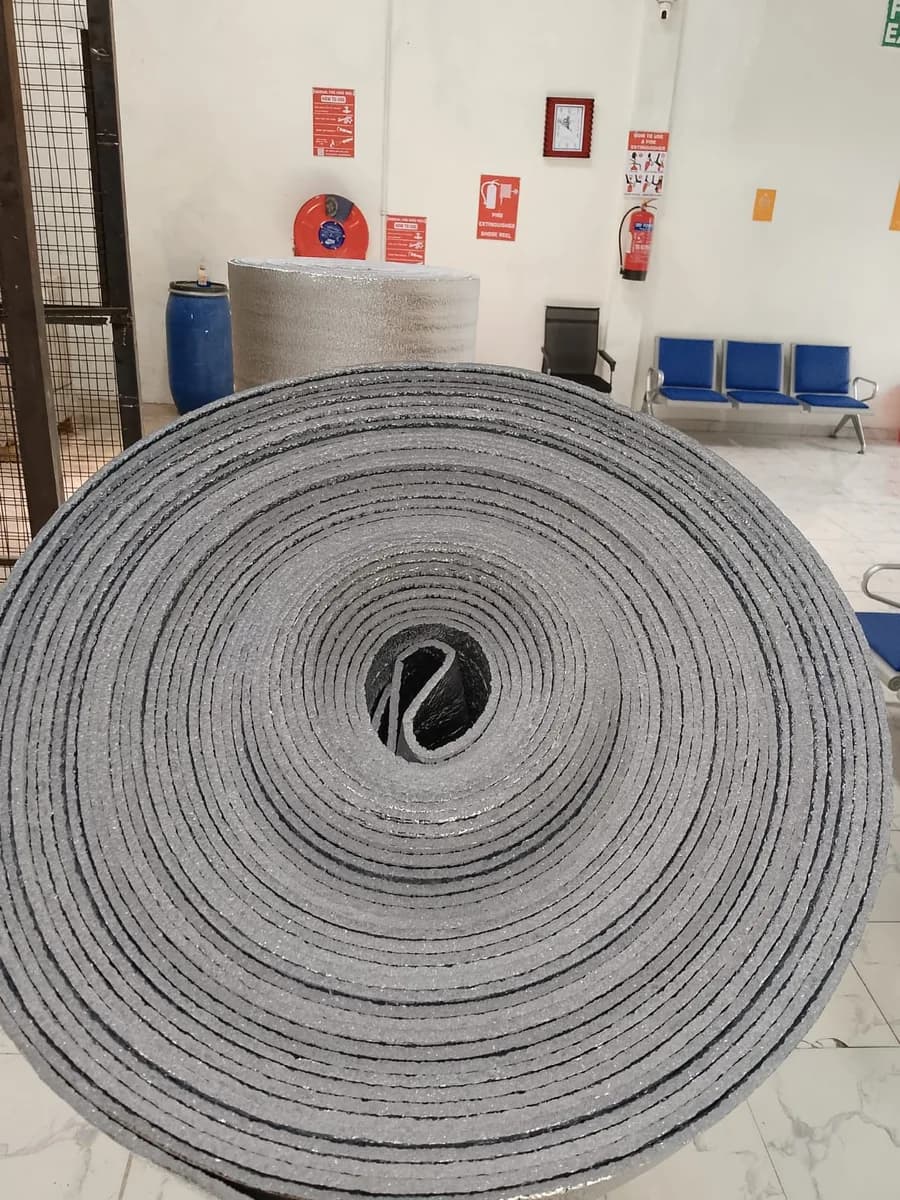
- Double laminated carries foil on both faces of the foam core. Single laminated carries it on one, for where only one side faces an air gap.
- What roll sizes do you stock?
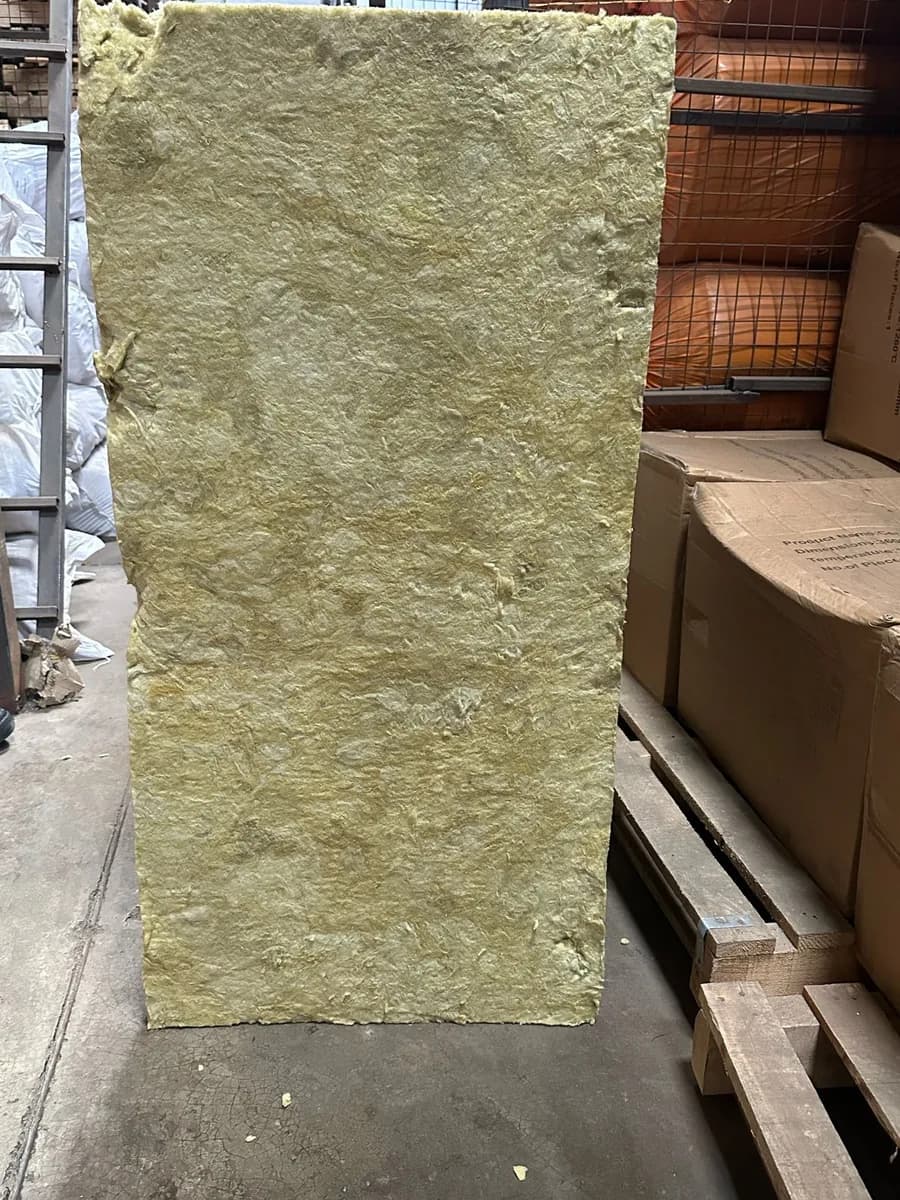
- Double laminated: 2mm to 20mm thick, in 1.2m to 2m widths and 40m or 50m lengths. Single laminated: 40m × 1.5m in 3mm and 5mm, and 50m × 1.2m in 2mm and 10mm. Wall board is 2m × 1m, from 20mm to 100mm.
- How do I work out my roof area from the house plan?
- A sloping roof is bigger than the floor under it. Measure the plan out to where the insulation will stop, at the eaves or the wall line, and multiply by the pitch factor, 1 ÷ cos(pitch) rounded up: 10° 1.016, 15° 1.036, 20° 1.065, 25° 1.104, 30° 1.155, 35° 1.221, 40° 1.306, 45° 1.415. It holds for gable and hipped roofs alike while every slope has the same pitch. A 12m × 9m house with 0.6m eaves all round is 13.2 × 10.2 = 134.6 m² in plan; at 25° that is 134.6 × 1.104 = 148.6 m² of roof. Divide by what one roll covers (60, 75, 95 or 100 m²) and round up: 148.6 ÷ 100 = 1.49, so 2 rolls of 50m × 2m. The insulation coverage calculator on this site takes the plan and the pitch and does both steps.
- Which thickness should I choose?
- The foil does the reflecting, and a foil face reflects the same whether the foam behind it is 2mm or 20mm. Thickness adds what the foam does on its own: resistance to conducted heat, which rises in step with the thickness, and a stiffer roll between the purlins. No R-value is published for these rolls, so we cannot put a figure on the difference. Tell us the building and what it is for, and we will ask the supplier rather than guess.
- How is it fitted under iron sheets?
- On a new roof it is rolled out over the purlins before the sheets go on, left to sag a little between them so there is air between the foil and the sheet, and the sheets are fixed down through it. On a roof that is already up, it is fixed to the underside of the purlins or rafters from inside. Either way, tape every joint with aluminium tape, and turn the foil of a single-laminated roll toward the air gap. We supply the material; your roofer or fundi fits it.
- Will it stop condensation dripping from the sheets?
- It helps, within limits. On clear, still nights an iron roof can cool below the dew point of the air, and water condenses on any face of the sheet that air reaches. A vapour barrier draped under the sheet, with an air gap, restricts the building's own moisture from reaching the cold underside, and the closed-cell foam is a vapour barrier once every joint is taped. In an open shed, carport or veranda, night air moves freely under the roof and condensation on the underside of the sheet is to be expected, so tell us if that is the building.
- What else do I need?
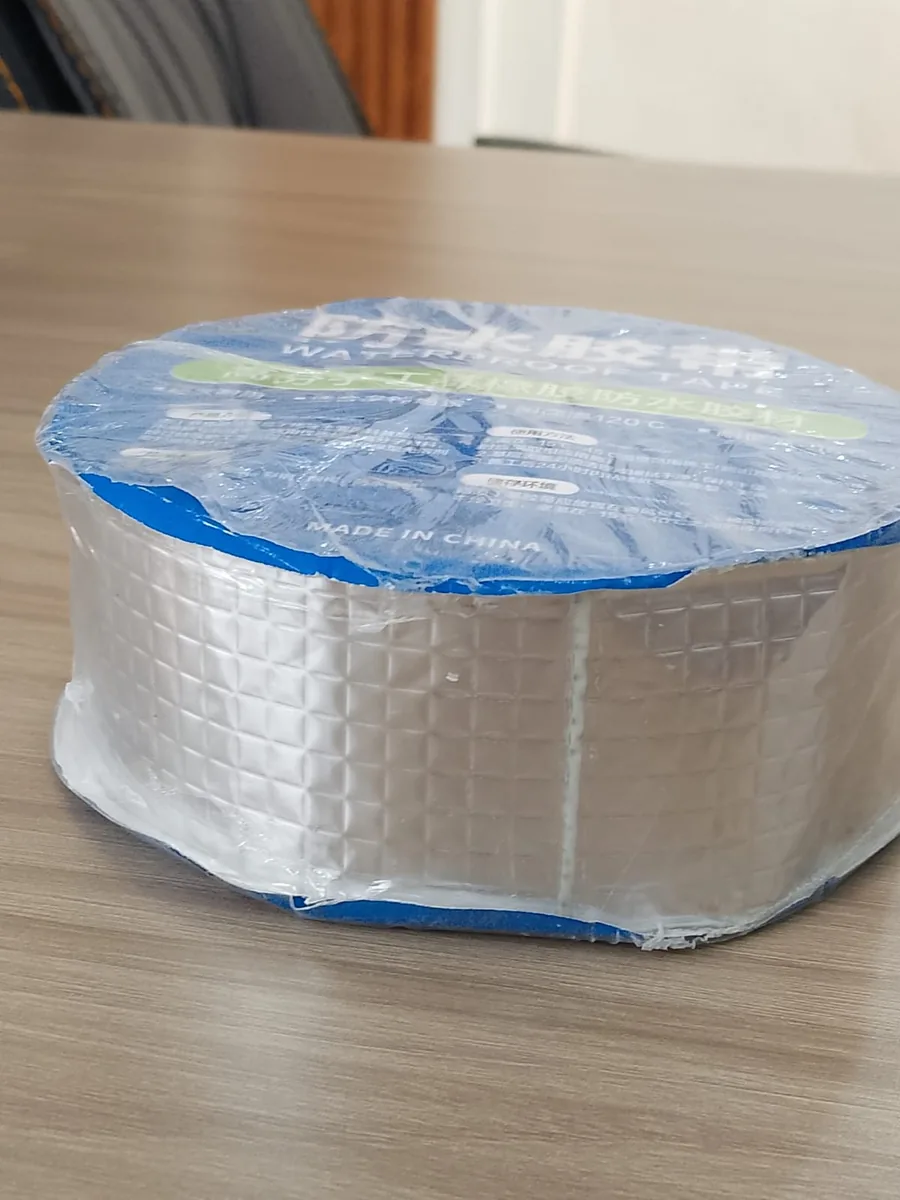
- Aluminium tape for the joints. Allow about the roof area divided by the roll width in metres of joint, plus one roll width wherever a roll runs out part-way along: 148.6 m² in 2m-wide rolls is about 75m, so five 18m rolls of 2 or 3 inch aluminium thermal tape, or two 50m rolls of the 220mm self-adhesive foil. Put the tape on the same enquiry and we quote it with the insulation.