- How much does a fire brick cost in Kenya?
- Fire brick is priced per brick, and the figure depends on the grade, the shape and how many you need, so we quote rather than publish a price. Send the grade, the shape and the number of bricks and we reply with an itemised quotation.
- What size is a standard fire brick?
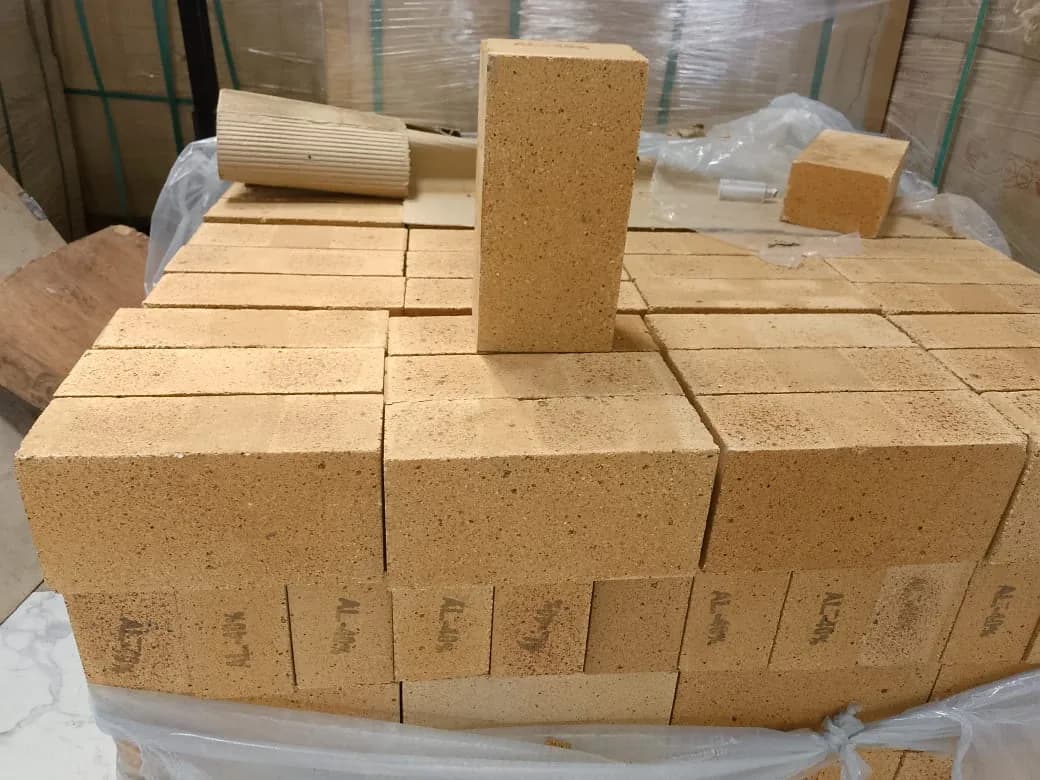
- 230 × 115 × 75mm. The 40% alumina grade is also stocked as end arch and side arch brick, 25mm splits and 600 × 300 × 75mm slabs. Zirconia brick is 230 × 115 × 38mm.
- What is the difference between a fire brick and an ordinary brick?
- A fire brick is made to hold its shape and strength in a furnace, and is specified by its alumina content and the temperature it is rated to: 1600°C for our 40% alumina brick, 1750–1800°C for 70% alumina and 2000°C for zirconia. An ordinary building brick carries no temperature rating and is not made for direct flame.
- Can I use fire bricks for a pizza oven, a fireplace or an institutional jiko?
- Yes. The 40% alumina brick is the general-duty grade, rated to 1600°C, well above what an oven or a fireplace reaches. Lay it in refractory mortar rather than ordinary cement mortar: Maxset 50 Fine is rated to 1500°C.
- How many fire bricks do I need per square metre?
- Count by the face that shows in the lining. A standard 230 × 115 × 75mm brick laid flat, for a 75mm lining, covers 0.026 m², about 38 bricks per m². Laid on its side for a 115mm wall (the 230 × 75mm face) it is about 58 per m², and laid end-on for a 230mm wall (the 115 × 75mm face) about 116. A 600 × 300mm slab covers 0.18 m², 5.6 per m². These counts are before joints, cuts and breakage: joints lower the count slightly and cuts raise it, so send us the drawing or the dimensions and we will quote the number.
- Dense or insulating fire brick?
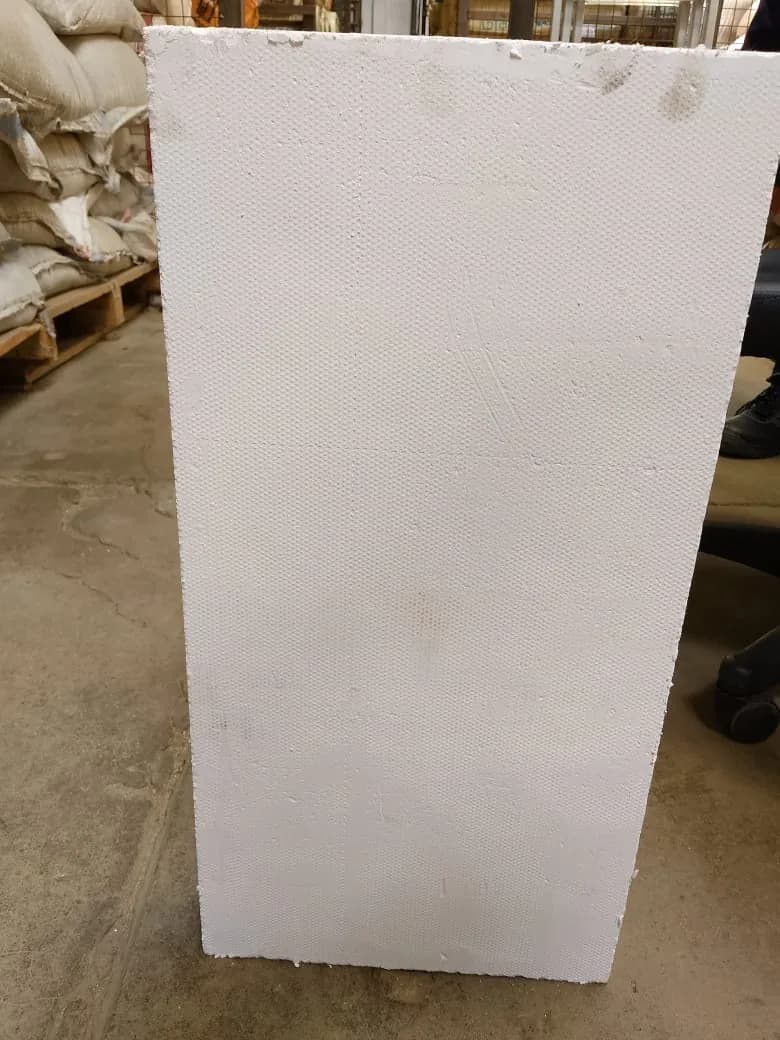
- Dense brick (40% or 70% alumina, or zirconia) is the hot face: it takes the flame, the slag and the load. The insulating brick we stock is a cold-face brick, about 2 kg against 5.2 kg for 70% alumina, and no maximum service temperature is published for it, so it goes behind the dense brick to cut heat loss and weight, not in front of the flame.
- Is the temperature on a fire brick its working temperature?
- Not necessarily. Refractory figures come in two kinds. Refractoriness is a laboratory softening point: for fireclay and high-alumina bricks it is measured as a pyrometric cone equivalent (ASTM C24), which reflects time, temperature and atmosphere together. The maximum service temperature is lower, and it is the figure a lining is designed to. Mahakoshal's sheet for Maxheat A castable shows the gap: 1750°C service against a refractoriness of at least 1820°C. The fire brick figures on our stock list (1600°C for 40% alumina, 1750–1800°C for 70% and 2000°C for zirconia) do not say which kind they are, so ask us to confirm from the maker before you design a lining to one.
- 40% or 70% alumina fire brick?
- 40% alumina is the general-duty brick, rated to 1600°C and stocked in five shapes. 70% alumina is for linings that face slag attack or carry load while hot, rated to 1750–1800°C, at about 5.2 kg a brick. Where there is no slag and no hot load, 70% buys a property you are not using, in a heavier brick.