Anyone building or repairing a furnace, kiln, boiler or oven lining
A refractory lining is either built from shapes, fire bricks laid in mortar, or cast in place from a castable mixed with water. Both are on this shelf in grades rated from 1600°C up, so the temperature rarely settles the choice. The job does: its shape, how it will be installed, how soon it must run and how it will be repaired.
A lining can use both. This guide sets out where each earns its place, using the figures we hold, and leaves the design of a particular lining to whoever is responsible for it.
Shape decides first
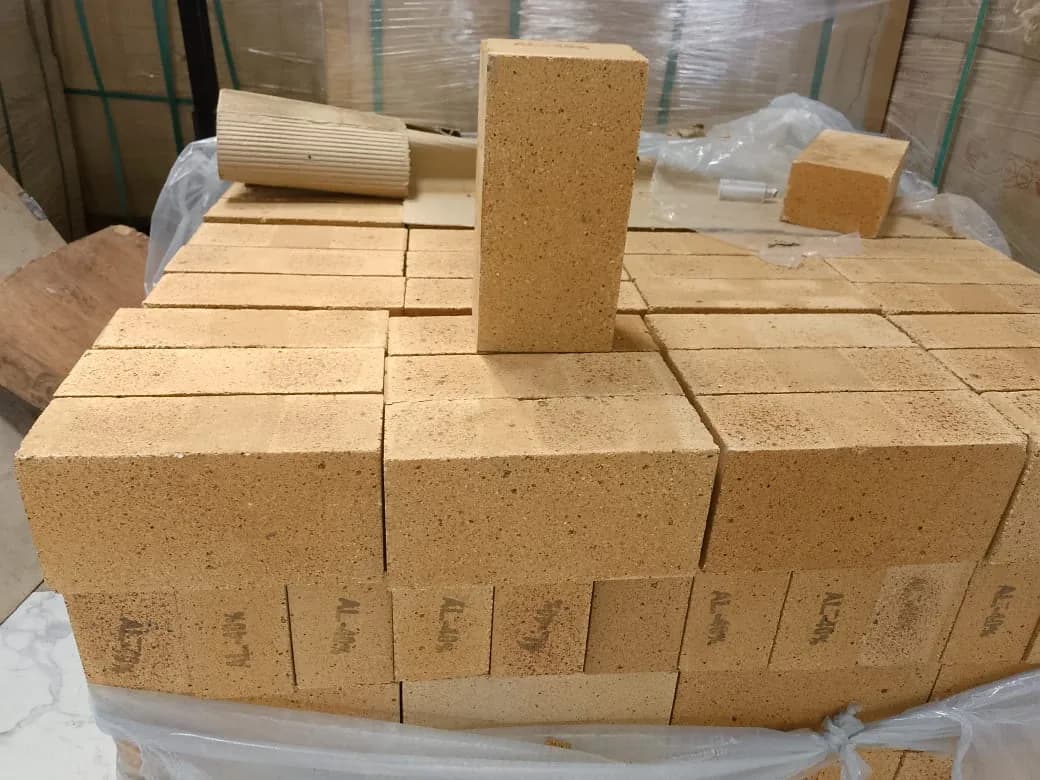
Bricks build regular work: walls, floors and arches from the standard 230 × 115 × 75mm 40% alumina and 70% alumina bricks, with arch tapers for curves, 25mm splits and 600 × 300mm slabs.
Castable takes whatever shape a mould gives it: a burner block, a door jamb, the lining around a pipe or an anchor, the odd-shaped gap where bricks have fallen out. Refractory makers put it plainly: unshaped refractories can be engineered into any shape, and they are quicker to install than brick.
Joints
A brick lining is many pieces with a joint between each pair, laid in a refractory mortar such as Maxset 50 Fine, rated to 1500°C. The mortar is part of the lining as much as the brick is.
A cast lining has no joints or seams in the castable itself, which is one of the advantages its makers claim for it.
Castable has to be dried; bricks arrive fired
Castable is mixed with water on site: 7.5–8.5% for Maxheat A and 9.5–10.5% for Maxheat K on Mahakoshal's data sheet. That water has to leave before the lining sees its working heat.
Research on dense castables calls drying the most critical part of their first heating. Heated too fast, the steam has nowhere to go, and the lining can crack or spall explosively. So the heat-up schedule is part of the castable, not an afterthought: we do not publish one, so ask for the maker's schedule with the order and give it to whoever fires the lining.
It also means a cast lining is not ready to run when the pour is finished; the drying is part of the build time. Fired bricks carry no mixing water, and the moisture in a brick lining is in its mortar joints.
Repairs
Castable suits patching: a damaged area can be cut back and recast without rebuilding the courses around it, and makers describe gunned castable as a way to repair with less downtime.
A brick lining is repaired by taking out the damaged bricks and laying new ones, which needs the same shapes on hand and room to lay them.
Movement has to go somewhere
A cast lining is one piece, so its movement has to be designed in. Mahakoshal gives a permanent linear change of ±1.5% for Maxheat A at 1550°C and for Maxheat K at 1500°C: the movement to allow for at joints and against anchors.
If a design depends on how a brick lining will move, ask for the brick maker's figure; it is not published here.
Often the answer is both
A lining can be brick where the work is regular and castable where it is not: brick walls and floors, cast burner blocks and door frames, castable patches in a brick lining.
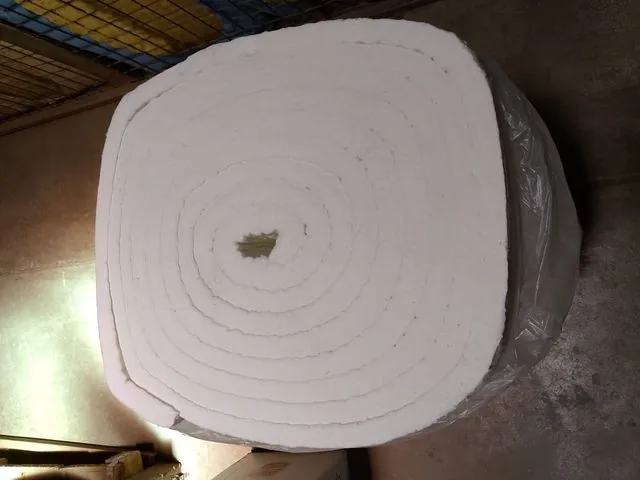
Behind either goes the insulating layer: insulating firebrick, Maxlyte 11 insulating castable or ceramic fibre.
What to send us
- The lining's area and thickness, or a drawing. The fire brick and castable calculator turns area and thickness into bricks or bags.
- The working temperature, and what the lining faces: flame, molten metal, slag or heat alone.
- New build or repair, and how soon it has to run.
- Brick, castable or both, or ask us to quote it both ways.
Send us the duty and we will confirm the specification against the manufacturer's documentation.
Request a quote