Kisaju, Kajiado CountyMon – Sat, 8 AM – 5 PM

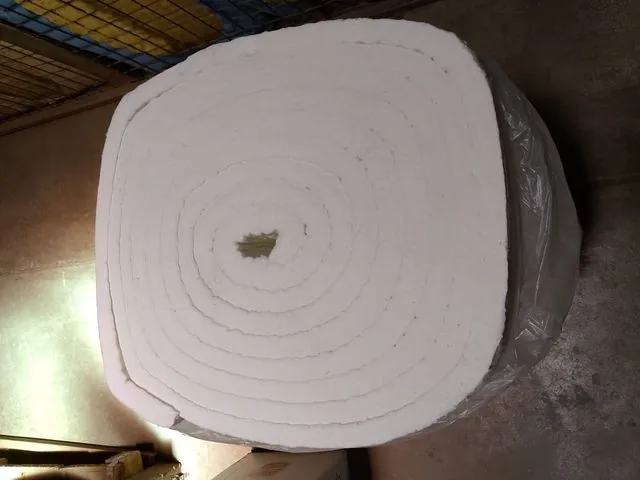
Roll of white ceramic fibre blanket insulation
Grade (classification temperature)
1260°C
Continuous-use temperature
Not published — ask us to confirm
Material
High-purity alumina-silica fibre
Density
128 kg/m³
Sizes
7620×610×25mm, 3600×610×50mm; pad 6600×220×15mm
ShareWhatsApp

Ceramic Fibre Blanket

  • 1260 grade
  • 128 kg/m³
  • 25 & 50mm

Ceramic fibre blanket is spun from high-purity alumina-silica and needled into a flexible mat, classified at 1260°C. That is the grade's classification temperature, not a continuous-use rating: published 1260-grade data sheets give continuous use of 1100–1180°C, so ask us for this blanket's figure before specifying near that range. It cuts with a knife and wraps to shape, so it lines furnaces, kilns and boilers far faster than dense brick. Its low thermal mass also means quicker heat-up and less fuel burnt getting there.

Also called: ceramic fiber blanket, ceramic blanket, ceramic wool, refractory blanket.

Request a Material QuotationAsk on WhatsApp

Request the technical data sheet for Ceramic Fibre Blanket.

Applications

  • Furnace and kiln hot-face linings
  • Boiler and oven insulation
  • Pipe, duct and flue lagging
  • Expansion joints and gap packing
  • Back-up insulation behind refractory brick

Advantages

  • 1260 grade (a classification temperature, not a continuous-use rating)
  • Low thermal mass — faster heat-up, lower fuel cost
  • Cuts and wraps to shape on site
  • A fraction of the weight of dense refractory

Working out material quantities? Use our insulation coverage calculator: how many rolls, slabs or boards of our stocked sizes cover your area.

Sizes stocked

3 sizes across one range. Ask for anything not listed — much of the range is cut or made to order, and we quote to your specification.

Blanket & pad3

  • Blanket 3600mm × 610mm × 50mm 128 kg/m³ 1260°C
  • Blanket 7620mm × 610mm × 25mm 128 kg/m³ 1260°C
  • Pad 6600mm × 220mm × 15mm 1260°C

Ceramic fibre blanket: price and how to order

We quote ceramic fibre blanket to order rather than publishing a price list. The price depends on the thickness and the number of rolls.

You get an itemised quotation: a price for each line, availability and the date your order will be ready. Collect from our Kisaju yard on Namanga Road, or in Nairobi by arrangement with our team. We prefer you to arrange your own transport; if you need help, we can coordinate a courier, matatu or boda at a cost you approve first. How Nairobi collection works.

How our prices and quotations work

To quote, we need

  • Thickness: 25mm or 50mm blanket, or the 15mm pad
  • Number of rolls, or the area to line
  • Operating temperature of the furnace, kiln or boiler
  • What the lining touches: flame, gas or metal

Not sure of one of these? Send what you have, or a photo of the label on the old stock, and we will ask for the rest.

Questions buyers ask about ceramic fibre blanket

How much is ceramic fibre blanket in Kenya?
We quote by the roll rather than publish a price. It depends on the thickness and the number of rolls. Send the thickness and the area you need to line and we reply with an itemised quotation.
What is ceramic fibre blanket used for?
Lining furnaces, kilns, boilers and ovens; lagging pipes, ducts and flues; packing expansion joints; and as back-up insulation behind refractory brick. It is a 1260 grade: 1260°C is its classification temperature, and continuous use is lower, so ask us for the figure before specifying it to a hot face.
Is ceramic fibre the same as rockwool?
No. Ceramic fibre is spun from alumina-silica and sold as a 1260 grade, for furnace and kiln temperatures. Rockwool is spun from basalt and is used on pipework, tanks, ducts and buildings. If you are unsure which your job needs, tell us the operating temperature.
What sizes does it come in?
7620 × 610 × 25mm and 3600 × 610 × 50mm rolls at 128 kg/m³, and a 6600 × 220 × 15mm pad.
How should it be handled?
Cut it with a knife rather than a saw where you can, and wear gloves, long sleeves and a dust mask. The maker's data sheet gives the full advice.

Send us your material list

A specification, a BOQ or a photo of the label on the old stock is enough to start. We reply with an itemised quotation.

Or call or WhatsApp 0722 293 517