Kisaju, Kajiado CountyMon – Sat, 8 AM – 5 PM

40% Alumina Firebricks 1600°C

  • 40% alumina
  • 1600°C
  • Five shapes

40% alumina is the general-duty firebrick, rated to 1600°C, for furnace and kiln work where the lining is built rather than cast.

It is stocked in five shapes for curved and flat builds: the standard 230 × 115 × 75mm brick, end-arch and side-arch tapers for curved work, 25mm splits, and 600 × 300 × 75mm slabs for flat work. Where slag attacks the lining, or it must hold load when hot, step up to 70% alumina.

Request a QuoteAsk on WhatsApp

Prices are quoted, not published. What the price of fire bricks depends on, and what to send us.

Used for

  • Furnace and kiln linings
  • Boilers, incinerators and fireplaces
  • Arch and dome construction

Request the technical data sheet for 40% Alumina Firebricks — 1600°C.

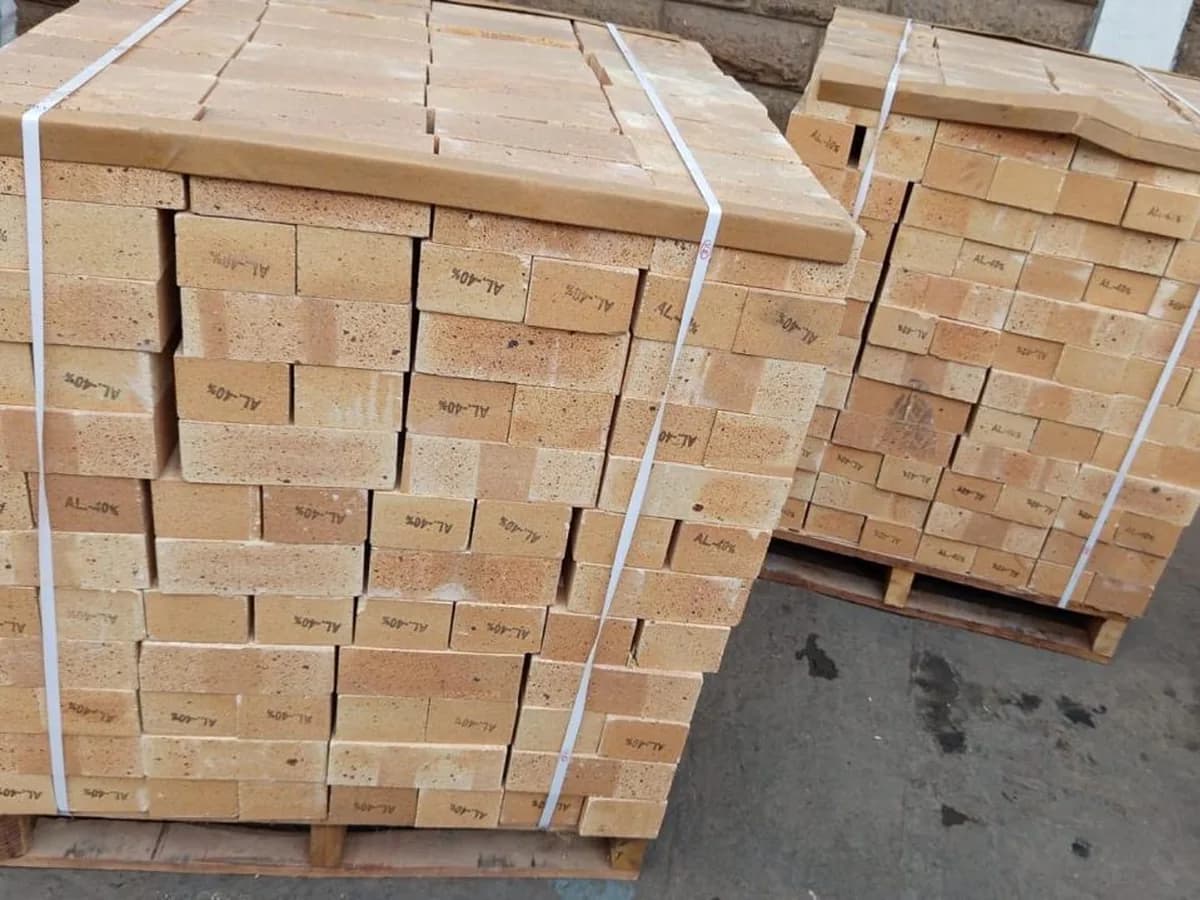
Two strapped pallets of 40% alumina firebricks, each brick stencilled AL-40%
Alumina
40% Al₂O₃
Max service temperature
1600°C
Standard brick
230 × 115 × 75mm
Shapes
Standard, end arch, side arch, split, slab

Sizes stocked

5 sizes on the stock list. Ask for anything not listed and we will quote to your specification.

Working out quantities? Use our fire brick and castable calculator to count these bricks for your lining area and the way you lay them.

  • End Arch (Tappered) Firebricks 230mm × 115mm × 75/65mm
  • Refractory Fire Slabs/Blocks 2ft(600mm)x1ft(300mm)x75mm(3 Inches)
  • Refractory Fire Splits 230mm × 115mm × 25mm
  • Refractory Firebricks 230mm × 115mm × 75mm
  • Side Arch (Taper) Firebricks 230mm × 115mm × 75/50mm

About 40% Alumina Firebricks — 1600°C

Five shapes, and what each is for

This is the only brick in the range stocked in five shapes, and the shape is usually what decides the order rather than the grade.

  • Standard, 230 × 115 × 75mm — straight walls and flat backs.
  • End arch and side arch — tapered so a ring of brick closes a curve without anyone cutting them on site. The two taper on different faces, and which one your arch needs depends on its radius.
  • Split, 25mm — a third of the standard thickness, for a thinner lining or a face layer.
  • Slab, 600 × 300 × 75mm — one piece covering the area of about seven standard bricks laid flat (0.18 m² against 0.026 m²), for flat work laid quickly.

Where 40% stops being enough

Rated to 1600°C, which covers most furnace and kiln duty. Two things take you past it, and neither is temperature alone: slag that attacks the lining chemically, and load the brick has to carry while hot. Both are what 70% alumina is for.

The reverse mistake costs more. Specifying 70% where there is no slag and no hot load buys a property you are not using, in a heavier and dearer brick.

Mortar for laying them

The jointing mortar we stock is Maxset 50 Fine refractory mortar, rated to 1500°C maximum service temperature. That is below the 1600°C published for this brick, and a lining fails at its weakest joint, so check the temperature the joints will actually see before using it. Tell us the operating temperature and we will confirm with the supplier before you order.

Where a cast lining would suit the job better than brick, see refractory cement, castable and mortar: which is which and the refractory castables we stock.

What is not published here

  • Cold crushing strength.
  • Thermal conductivity and bulk density.
  • Refractoriness under load.
  • Mortar or jointing recommendation.

Questions we get asked

Which arch brick do I need?
That comes from the radius of the arch, not from the lining temperature. Tell us the internal radius and the ring thickness and we will confirm which taper closes it — guessing between end and side arch is how a ring ends up a brick short or a brick proud.
Will it stand up to slag?
Not reliably. Slag attack is chemical rather than thermal, so a brick can be well inside its temperature rating and still be eaten. Where slag is present, 70% alumina is the grade for it.
How many bricks will I need?
Give us the area and the lining thickness and we will work it back to a count. The standard brick is 230 × 115 × 75mm and the slab covers about as much as seven of them laid flat, so the shape you choose changes the number considerably.

Brick grades: which one?

GradeRated toChoose it for
40% Alumina Firebricks1600°CGeneral-duty furnace and kiln work where the shape is built rather than cast.
70% Alumina Firebricks1750 – 1800°CWhere slag attack and hot strength matter: steel furnaces and ladles.
Insulating Fire BricksNot publishedCold-face and back-up layers, to cut heat loss and weight.
Zirconia Bricks, 2000°C2000°CAbove 1800°C, where alumina gives out.

Send us your material list

A specification, a BOQ or a photo of the label on the old stock is enough to start. We reply with an itemised quotation.

Or call or WhatsApp 0722 293 517