Kisaju, Kajiado CountyMon – Sat, 8 AM – 5 PM

Insulating Fire Bricks Lightweight, Cold Face Standard

  • Insulating
  • ≈2 kg
  • 230×115×75mm

Insulating fire bricks, also sold as lightweight bricks or insulation bricks, are not the same product as a dense fire brick. They are about 2 kg against 5.2 kg for the 70% alumina brick, because they are mostly air.

Insulating brick goes behind the hot face, in the cold-face and back-up layers of a lining. At about 2 kg a brick it cuts wall heat losses, fuel and handling together.

No maximum service temperature is published for this brick, so it is specified for the cold face rather than the hot face. Tell us the temperature it will see and we will confirm it suits. Stocked in the standard 230 × 115 × 75mm size.

Request a QuoteAsk on WhatsApp

Prices are quoted, not published. What the price of fire bricks depends on, and what to send us.

Used for

  • Back-up and cold-face insulation
  • Kiln and furnace wall insulation
  • Reducing lining weight

Request the technical data sheet for Insulating Fire Bricks — Lightweight, Cold Face Standard.

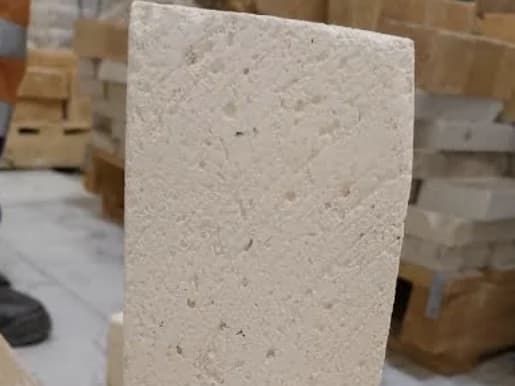
A lightweight insulating firebrick held up in front of stacked brick in the store
Type
Lightweight insulating brick
Max service temperature
Not published — ask us to confirm
Weight
≈2 kg per brick
Size
230 × 115 × 75mm

Sizes stocked

1 size on the stock list. Ask for anything not listed and we will quote to your specification.

Working out quantities? Use our fire brick and castable calculator to count these bricks for your lining area and the way you lay them.

  • Insulation Bricks Cold Face Standard (230mm*115mm*75mm)

About Insulating Fire Bricks — Lightweight, Cold Face Standard

Where it goes, and why that matters

This brick belongs behind the hot face, not on it. Its job is to stop heat reaching the shell, and it does that by being mostly air — which is also why it will not take the duty the dense bricks take.

At about 2 kg against 5.2 kg for the 70% alumina brick, a back-up layer in insulating brick takes roughly 60% of the weight out of that part of the wall. On a kiln that shows up in the structure, in the fuel and in how fast the lining can be cycled.

The figure that is missing, and what to do about it

No maximum service temperature is published for this brick. That is why it is sold here for the cold face and the back-up layer rather than for the hot face — not because a figure exists and is low, but because there is no figure to stand behind.

So the specification has to come from your side of it. Tell us the hot-face temperature, what the hot-face lining is made of and how thick it is, and we will confirm with the supplier what this brick will see at the back of it before you order.

What is not published here

  • Maximum service temperature.
  • Bulk density and thermal conductivity.
  • Cold crushing strength.
  • Classification temperature to any standard.

Questions we get asked

Can it go against the flame?
Not on anything we publish. With no maximum service temperature stated, specifying it for a hot face would be guessing with your lining. Use a dense brick or a castable at the face and this behind it.
Can I lay it with the same mortar as the dense brick?
Ask before you buy the mortar. The two bricks move differently as they heat, and no jointing recommendation is published for this one — we would rather check with the supplier than have you find out at the first firing.

Brick grades: which one?

GradeRated toChoose it for
40% Alumina Firebricks1600°CGeneral-duty furnace and kiln work where the shape is built rather than cast.
70% Alumina Firebricks1750 – 1800°CWhere slag attack and hot strength matter: steel furnaces and ladles.
Insulating Fire BricksNot publishedCold-face and back-up layers, to cut heat loss and weight.
Zirconia Bricks, 2000°C2000°CAbove 1800°C, where alumina gives out.

Send us your material list

A specification, a BOQ or a photo of the label on the old stock is enough to start. We reply with an itemised quotation.

Or call or WhatsApp 0722 293 517