Kisaju, Kajiado CountyMon – Sat, 8 AM – 5 PM

Rockwool Rolls & Blanket 100 & 120 kg/m³

  • 100 & 120 kg/m³
  • 50 – 100mm
  • Non-combustible

Rolls are the form of rockwool for wrapping: tanks, ducts, boilers and hot pipework. At 100 kg/m³ the plain blanket sits between the 150 kg/m³ pipe sections and the 50 kg/m³ slabs, and the denser of the two mesh-faced blankets runs to 120 kg/m³.

Three plain blanket sizes are stocked, 6m × 1m × 50mm and 3m × 1m in 75mm and 100mm. Two more are faced with wire mesh, which holds the blanket's shape against curved plant rather than letting it slump: ProRox at 5m × 1.2m × 50mm and 100 kg/m³, and a denser 3m × 1m × 50mm at 120 kg/m³. Rockwool does not burn.

Request a QuoteAsk on WhatsApp

Prices are quoted, not published. What the price of rockwool depends on, and what to send us.

Used for

  • Tank, duct and boiler insulation
  • Steam and process pipework lagging
  • Passive fire protection

Request the technical data sheet for Rockwool Rolls & Blanket — 100 & 120 kg/m³.

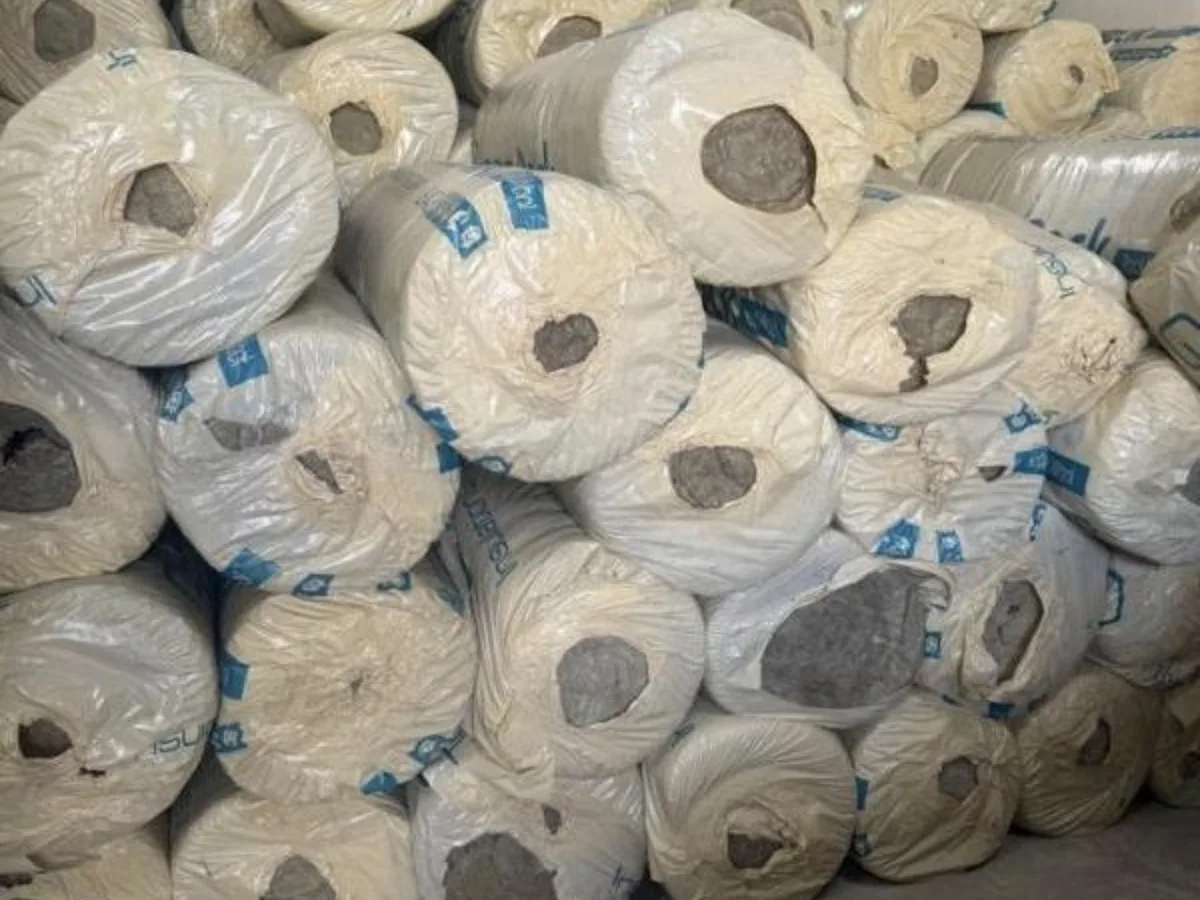
Rolls of mineral wool blanket stacked in the store
Density
100 kg/m³; 120 kg/m³ in one mesh-faced blanket
Blanket
6m × 1m × 50mm; 3m × 1m × 75 & 100mm
With wire mesh
ProRox 5m × 1.2m × 50mm; 3m × 1m × 50mm
Max service temperature
Not published — ask us to confirm

Sizes stocked

5 sizes on the stock list. Ask for anything not listed and we will quote to your specification.

Working out quantities? Use our insulation coverage calculator to see how many of these sizes cover your area.

  • High Density (120 kg/m³) Rockwool With Mesh 3Mx1Mx50mm
  • High Density ProRox Rockwool Blanket 5MX1.2MX50mm with Wiremesh 100 kg/m³
  • Rockwool Insulation Blanket 3m × 1m × 75mm
  • Rockwool Insulation Blanket 3m × 1m × 100mm
  • Rockwool Insulation Blanket 6m × 1m × 50mm

About Rockwool Rolls & Blanket — 100 & 120 kg/m³

Plain blanket or wire mesh

Three of the five lines are plain blanket and two carry wire mesh stitched to one face. The mesh is not insulation — it holds the blanket's shape against something curved instead of letting it slump away from the top of the pipe or vessel as it is strapped down.

For a flat duct or a tank side, plain blanket is cheaper and does the same job. For anything round and anything vertical, the mesh is usually what keeps the lagging where it was installed.

Two densities on one page

The plain blanket is 100 kg/m³. One of the mesh-faced lines runs heavier at 120 kg/m³, which is the denser blanket holding its shape against more demanding curves.

Neither figure is a measure of how well it insulates — all mineral wool works by holding still air. Density here predicts stiffness and what the blanket will stay wrapped around.

Hot lines, and the thickness question

Non-combustible, which is what makes rockwool the material for steam, boilers and hot process plant — tell us the operating temperature, because the working limit for this stock is not yet published. Chilled lines are the opposite problem and want a closed-cell material instead.

Thickness is stocked at 50, 75 and 100mm. Which one you need comes from the line temperature, the ambient and the surface temperature you have to reach — not from the pipe size.

Water-repellent is not waterproof

Stone wool sheds liquid water but it is not a barrier to it. Rain, wash-down or a leaking flange soaks into wet insulation, and wet insulation insulates badly and holds water against the metal underneath — which is where corrosion under insulation starts.

Outdoors, or anywhere it can get wet, it needs a cladding over it. Aluminium sheet and galvanized sheet are both on this catalogue for that job, and stainless sheet where the environment calls for it. The insulation and the cladding are two separate parts of the order.

What is not published here

  • Maximum service temperature for each blanket line.
  • Thermal conductivity at temperature.
  • A manufacturer's data sheet for each blanket line — the ProRox line is a named product, so ask and we will get its sheet.
  • Chloride content, for blankets going onto stainless plant.
  • Fire classification to any standard.

Questions we get asked

Does it need cladding?
Outdoors, or anywhere it can get wet, yes. Stone wool is water-repellent but not waterproof, and a blanket that soaks up rain stops insulating and starts holding water against the steel. Aluminium or galvanized sheet over it is the usual answer, and both are on this catalogue.
Will plain blanket stay on a pipe?
On a small-bore line, preformed pipe sections are the better answer than any blanket. On a large vessel or a duct, a plain blanket strapped down is normal. It is in between — big curves, vertical runs, anything that will be walked past and knocked — where the wire mesh earns its cost.
What thickness do I need?
Tell us the operating temperature, whether it is indoors or outdoors and what surface temperature you are working to. If it is a personnel-protection figure or a heat-loss target, say which — they give different answers, and we would rather ask than guess at 50mm.

Rockwool forms: which one?

GradeDensityChoose it for
Rockwool Pipe Sections150 kg/m³Hot pipework from ½ to 6 inch bore, lagged without cutting.
Rockwool Rolls & Blanket100 & 120 kg/m³Tanks, ducts, boilers and curved hot plant.
Rockwool Slabs (Batts)50 kg/m³Flat work: walls, roofs, equipment and partitions.

Send us your material list

A specification, a BOQ or a photo of the label on the old stock is enough to start. We reply with an itemised quotation.

Or call or WhatsApp 0722 293 517