Anyone fire-stopping a penetration or specifying insulation against a fire requirement
Non-combustible insulation is insulation that adds no fuel to a fire. That is a test result, not a description: it is decided in a furnace, and it belongs to the product that was tested.
Fire language on insulation and sealants is used loosely, and the cost of reading it loosely is a fire wall with a hole in it. There are four different claims, and they are not interchangeable.
This catalogue happens to illustrate all of them. Two of them sit on the same shelf, under the same brand, and say opposite things.
How non-combustibility is tested
Most classifications rest on one test, EN ISO 1182. A small cylinder of the material, 45mm across and 50mm tall, goes into a furnace at 750°C, and the laboratory records how far the temperature rises, whether the sample flames and how much of its mass it loses.
In the European system, EN 13501-1, that result feeds a reaction-to-fire class. A1 is the top class: no contribution to fire. A2 is a very limited contribution. ROCKWOOL, for one, counts both A1 and A2 products as non-combustible, so when a specification asks for non-combustible insulation, ask whether it means A1 alone.
The American test, ASTM E136, also holds the sample at 750°C, and materials that pass are typically classed as noncombustible.
Which insulation is non-combustible, and which is not
Composition decides it. Mineral and other inorganic materials can pass; plastics and rubbers cannot, because they are organic, and organic material burns. The EU list of materials classed A1 without testing allows none of them more than 1% organic content.
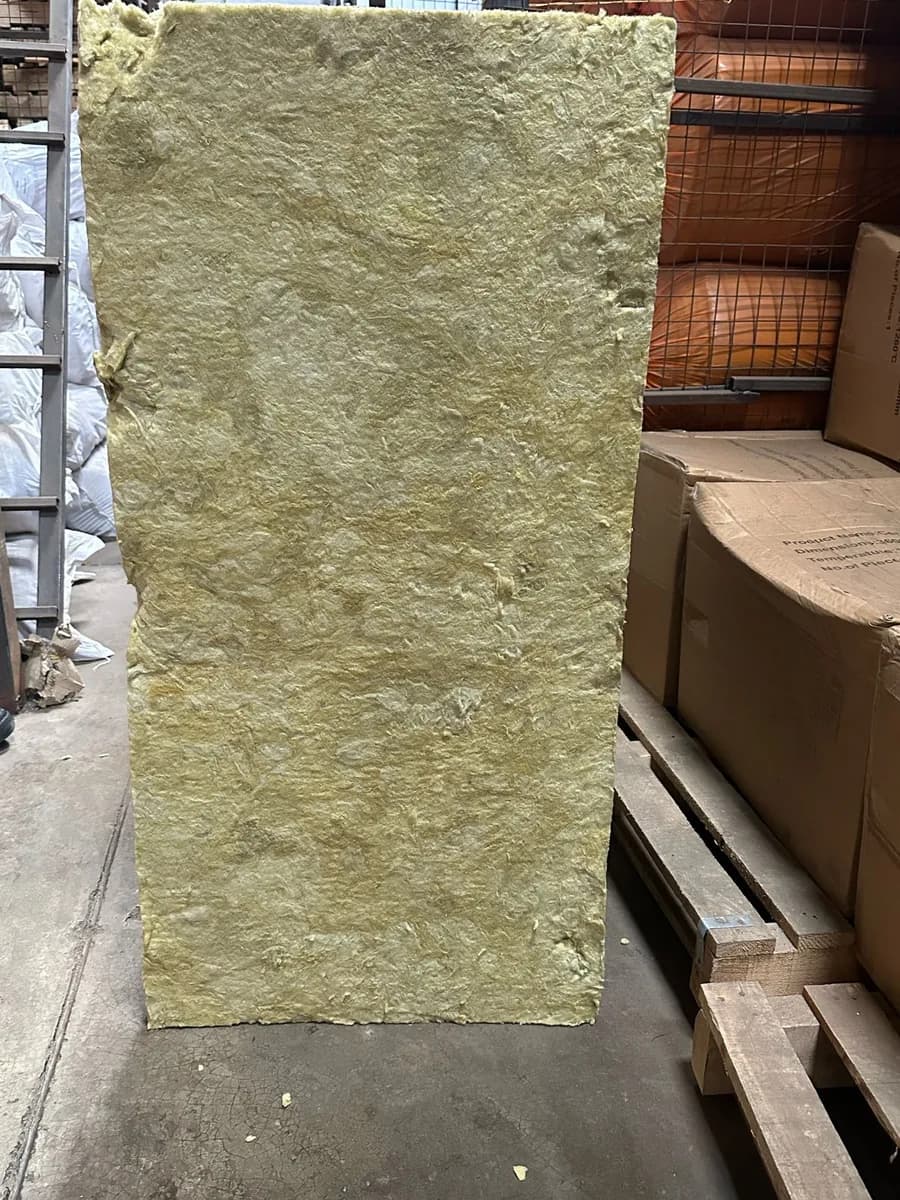
- Stone wool (rockwool): yes. ROCKWOOL classes its stone wool insulation A1. If a class is specified, ask for the class document for the rolls, slabs or pipe sections you are buying.
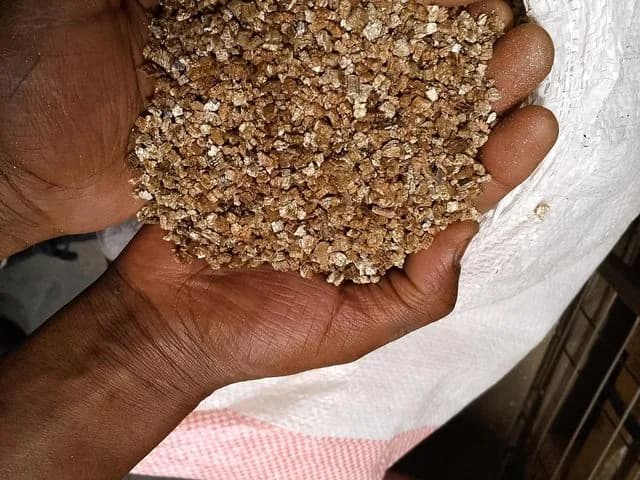
- Expanded vermiculite: yes. It is on the EU list of materials classed A1 without testing, within that 1% organic limit.
- Ceramic fibre and calcium silicate board: inorganic and made for high-temperature service, but their 1260°C and 1000°C figures are service ratings, not reaction-to-fire classes, and no class document is held for them.
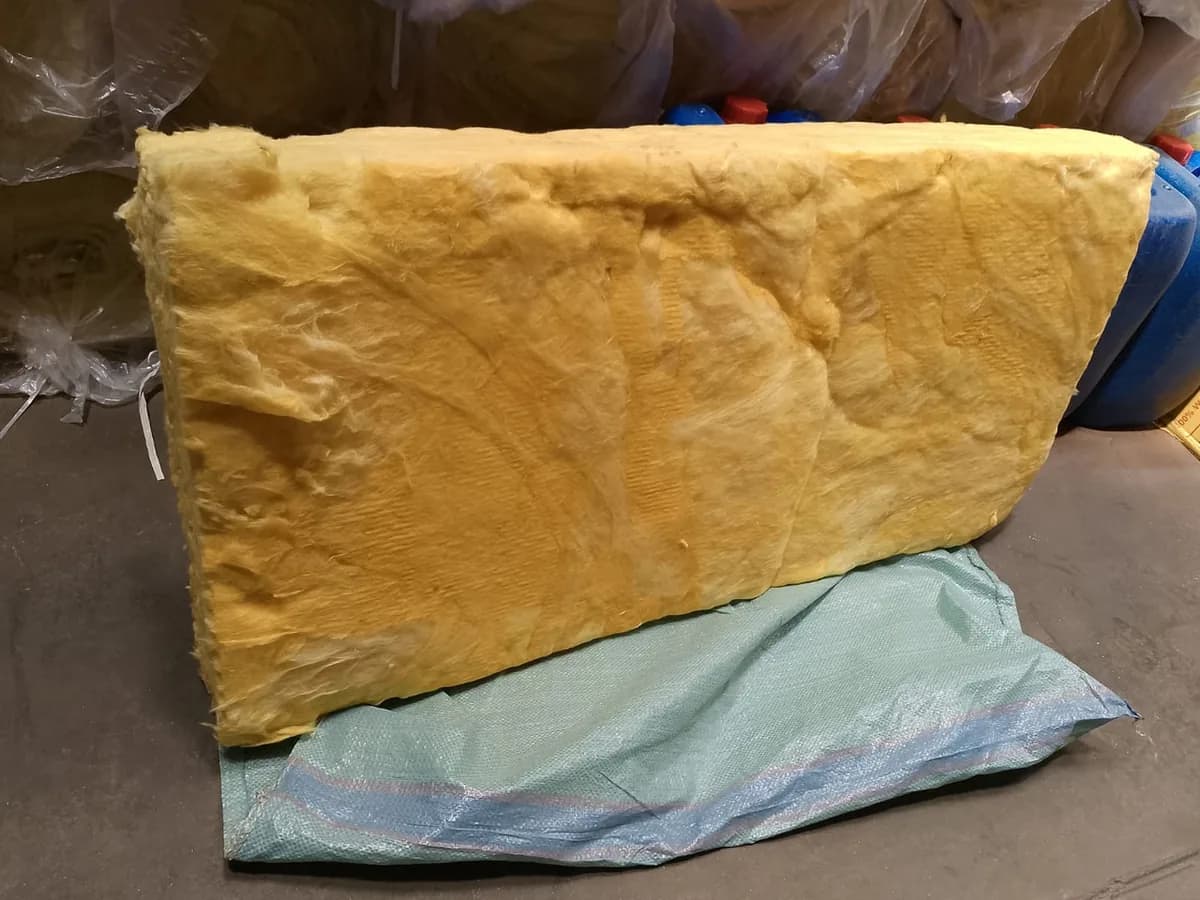
- Glass wool (fibreglass): a mineral wool too, but no class is published for the rolls and batts here, and a class covers the product as made, foil facing included.
- Polyethylene foam, polystyrene, elastomeric foam and PU foam: no. They are organic. Fire-retardant grades ignite less easily and spread flame more slowly, but they still burn.
How to check a non-combustible claim
- Ask for the class, not the word: an EN 13501-1 classification such as A1 or A2-s1,d0, or a test report to EN ISO 1182 or ASTM E136.
- Check that it covers the product as supplied, facing and all. A class belongs to the product that was tested, which is why one maker can sell stone wool products in both A1 and A2.
- Treat a temperature as a temperature. 1260°C on a ceramic blanket is what it survives in service; it is not a class.
- Remember the next step: a non-combustible material does not make a wall, floor or penetration seal fire-rated. Minutes of fire resistance belong to a tested assembly, which is what the rest of this guide is about.
Non-combustible: it adds no fuel
Rockwool is non-combustible. It does not burn — the material itself contributes nothing to a fire. That is a property of the stone wool, and it is the strongest of the four claims about a material.
What it does not tell you is how long a wall built with it will hold a fire back. That depends on the wall.
Fire-retardant: it still burns
Somafix S817 is a fire-retardant expanding polyurethane foam, and no maximum service temperature is published for it. Fire-retardant means the formulation resists ignition and slows the spread. It does not mean the foam will not burn. It will.
Its own page sells it for filling voids and sealing against air and moisture — not for fire-stopping. Gunning it into a service penetration through a fire wall because the can says fire-retardant is the most common way this distinction gets missed.
Rated to a temperature is not rated for a fire
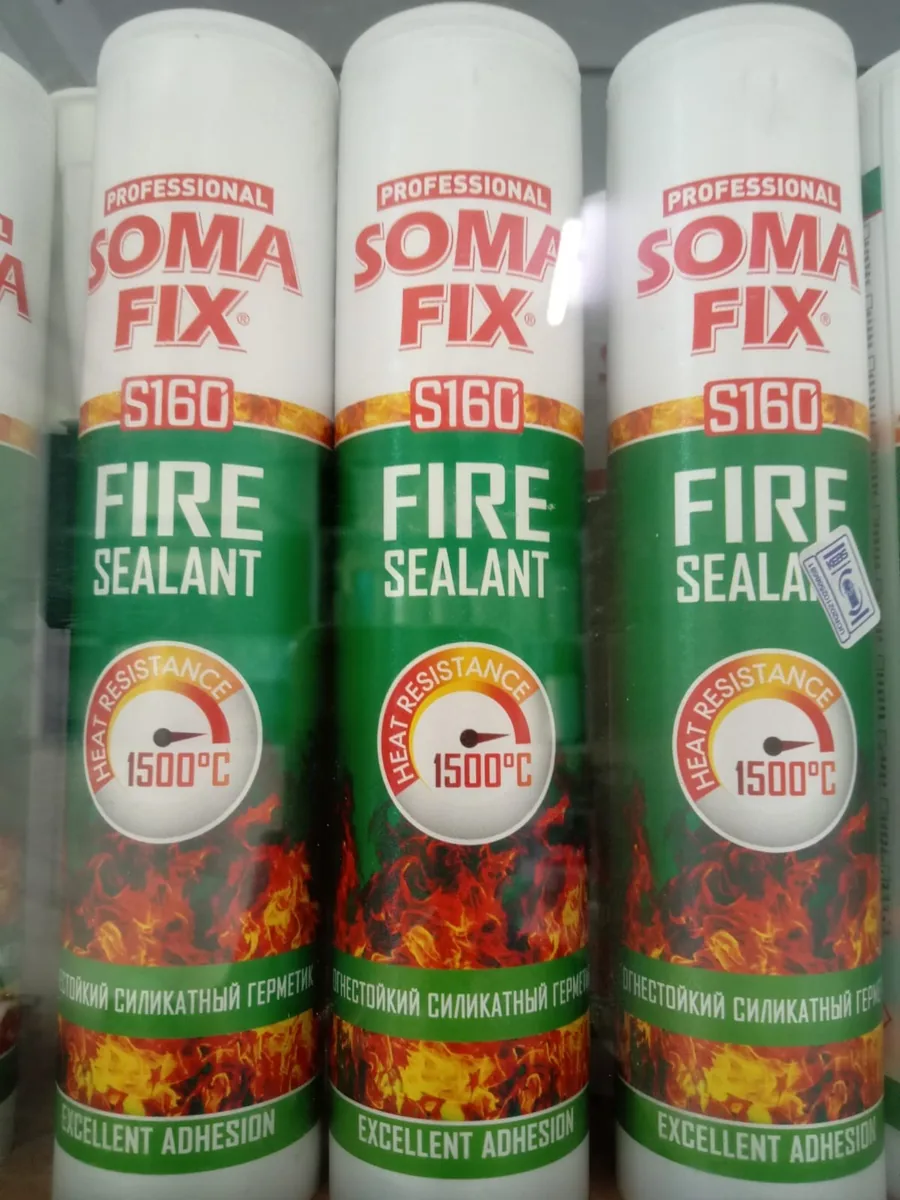
Somafix S160 sits beside S817 and is a different product entirely: a fire-resistant silicone sealant, rated to 1500°C and sold for fire-stopping, expansion joints and glazing perimeters.
That 1500°C is a service temperature — what the material survives. It is not a fire-resistance period. Thirty, sixty or one hundred and twenty minutes is a property of a tested assembly: this sealant, at this joint width, in this substrate, installed this way. A cartridge cannot carry that figure on its own, and S160 does not claim to.
What this catalogue does not publish
No product here carries a published fire-resistance period or a fire classification to any standard. The rockwool slab page says so in as many words.
If a specification, a fire officer or an insurer asks for a rating in minutes, they are asking for a tested system and a certificate for it. Tell us at quotation and we will ask the supplier what exists — rather than let a temperature figure stand in for a fire rating it is not.
Reading a fire claim in one line each
- Non-combustible — about the material. It will not feed the fire.
- Fire-retardant — about the material. It burns, more slowly. Not a fire-stop.
- Rated to a temperature — about service. What it survives, not for how long it holds.
- Fire-rated, in minutes — about a tested assembly. Ask for the certificate, and for the installation it was tested in.
Send us the duty and we will confirm the specification against the manufacturer's documentation.
Request a quote