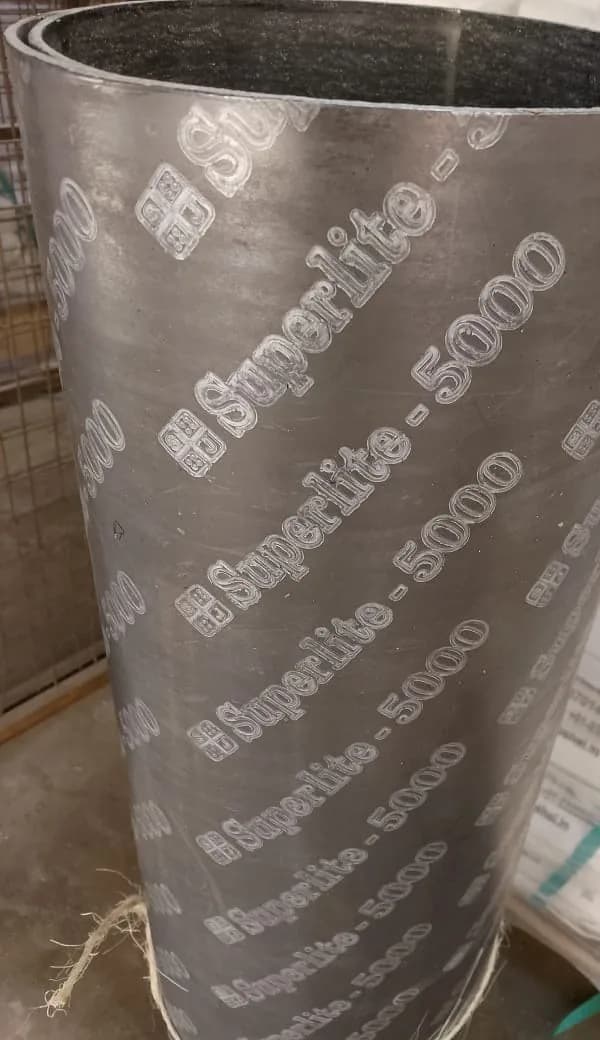
Maintenance and plant engineers cutting gaskets for flanges and covers
A gasket sheet is the material a gasket is cut from. The four grades here all come as 1500 × 1000mm sheets from 1.5mm to 6mm thick, and the most common mistake with them is choosing on a temperature figure alone.
Gasket maker Garlock's engineers put it plainly: a fibre gasket rated to 205°C is not, by that rating, suitable for sulphuric acid at 205°C. The medium comes first.
The medium decides the grade
- Style 59, oil-resistant: joints in oil service.
- Style 60, acid-resistant: acid and aggressive chemical service. Check the specific chemical and its concentration with us rather than assume the grade name covers it.
- Style 20 metallic, reinforced with a steel insert: steam, oil and gas, and severe thermal cycling.
- Style 20 non-metallic: general-duty joints where the medium is mild.
Pressure and temperature are read together
A gasket holds far less pressure hot than it does at room temperature, which is why Garlock rates its materials with a third figure, pressure × temperature (PxT), as well as separate maximums. Its engineers suggest a better grade once a duty approaches the continuous operating temperature, half the maximum pressure or half the PxT rating.
No pressure or PxT rating is published for the Superlite grades here, so send the duty and we will check it against the maker's figures.
Fitting decides more than the sheet
Garlock's study of failed gaskets put nearly 90% of failures down to improper installation, misaligned flanges, incorrect bolt torque or flanges unsuited to the gasket. A gasket seals by being compressed and held, so the bolting and the flange faces matter as much as the sheet, and its thickness affects performance as well.
Cutting it to the joint
To cut a gasket we need the flange standard, size and pressure class, or the gasket's inside and outside diameters with the bolt circle and holes. The gasket sheet page sets out what each of those means.
A gasket is for a joint that does not move
Gasket sheet seals faces that are clamped once and stay put. A shaft that turns or slides needs gland packing, and a door that opens and closes needs rope: a joint that moves and one that doesn't explains the difference.
What to send us
- Media: what the joint seals, and its concentration if it is a chemical.
- Temperature and pressure at the joint, normal and maximum.
- Application: pipe flange, cover, manway or equipment joint.
- Size: flange standard, size and class, or the gasket's dimensions, and the thickness.
- Quantity: sheets, or the number of gaskets.
Send us the duty and we will confirm the specification against the manufacturer's documentation.
Request a quote