Maintenance and plant engineers choosing a seal
On a parts list three sealing products here look close to interchangeable. All three fill a gap between two surfaces, all three are sold for hot service, and all three can be cut from stock to fit.
They fail in completely different ways when used in each other's place, and the reason is not temperature. It is how the two faces move relative to one another.
A joint that never moves: gasket sheet
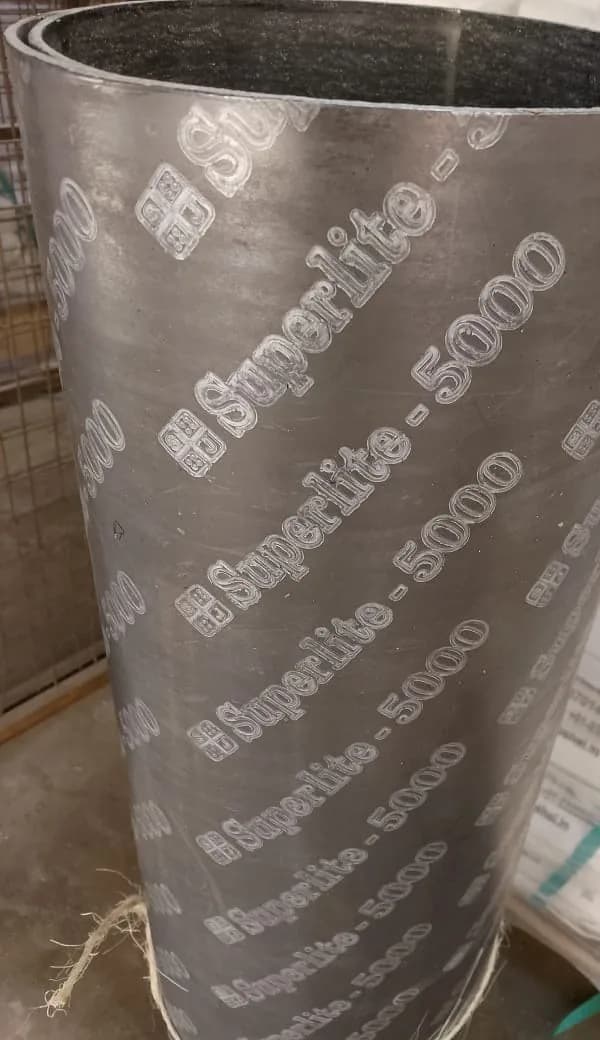
Flanges, covers and bolted joints. The two faces are clamped together once and stay where they are. Superlite jointing sheet is stocked as 1500 × 1000mm in seven thicknesses from 1.5 to 6mm, ready to be cut to the flange pattern.
A gasket seals by being compressed and held. The bolts load it and it stays loaded. Put it anywhere that moves and the movement wears through it — it was never built to be rubbed.
A shaft that turns or slides: gland packing
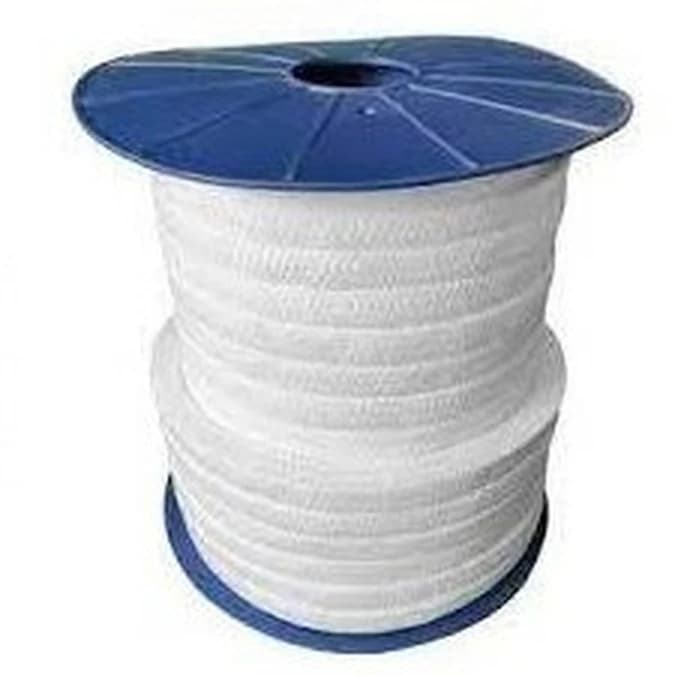
Pump shafts and valve stems. Here a surface runs against the seal continuously, and the packing is braided to bed into the stuffing box, wear in service and be taken up by tightening the gland.
On a rotating pump shaft, packing normally runs with a small, deliberate drip. The leak carries away the heat of friction. Tightening the gland until it is bone dry is how a shaft gets scored and a packing burns out.
Which packing — PTFE, aramid or graphited — is chosen by the medium and the duty, and the gland packing page sets that out.
A joint that opens and closes: ceramic fibre rope
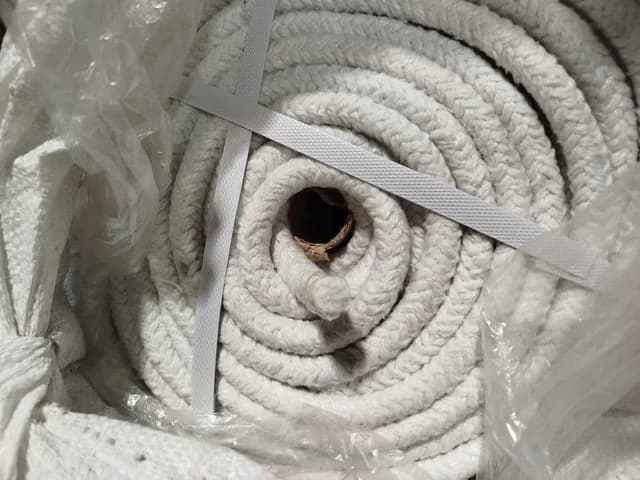
Furnace and kiln doors, boiler access covers, expansion joints. The seal is compressed every time the door shuts, released every time it opens, and has to come back each time.
Ceramic fibre rope is braided to do exactly that — it compresses to fill the gap and stays resilient through thermal cycling, in a 1260 grade. Round or square is decided by the groove it seats in.
Why temperature is the wrong place to start
All three take heat, so choosing on the rating alone is how packing ends up in a flange and gasket ends up on a shaft. Both then fail inside their temperature rating, and the failure gets blamed on the material rather than on the choice.
Start with the movement instead.
- The faces never move relative to each other — gasket sheet.
- One surface turns or slides against the seal — gland packing.
- The joint opens and closes — ceramic fibre rope.
What to tell us, for each
- Gasket: the flange dimensions or pattern, the medium, and the pressure and temperature of the line.
- Packing: the shaft diameter and stuffing-box bore, whether it rotates or reciprocates, and the medium.
- Rope: the groove profile and dimensions, and the perimeter of the door or cover.
Send us the duty and we will confirm the specification against the manufacturer's documentation.
Request a quote