Maintenance and plant engineers packing pumps, valves and agitators
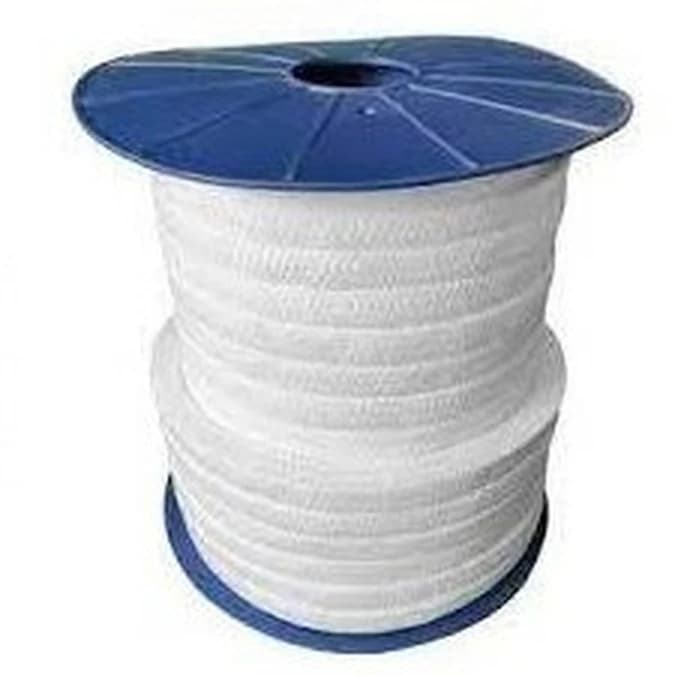
Three braided packings are on this shelf: PTFE, graphited and aramid, each in square sections from 6mm to 50mm on 5 kg and 10 kg rolls. They look alike in the box and fail differently in the stuffing box.
The sealing maker Garlock sums up what a selection needs in one word, STAMPS: Size, Temperature, Application, Media, Pressure and Speed. The material follows from those, not the other way round.
Start with the media
What the packing touches decides the family first. PTFE is the choice for the broadest chemical resistance, as long as the temperature is relatively low, which is why it is the packing here for chemical service and for media that must stay clean, in a food grade as well as an industrial one.
Graphite-based packing takes higher temperatures, which is why graphited packing is the one for steam and hot water. Strong oxidisers attack graphite unless it is inhibited, so say so if the medium is one.
Aramid is the abrasion-resistant one: aramid-blended packings are recommended for abrasive service, such as slurries and media carrying solids, where softer packing is cut apart. It is hard enough to wear a shaft that is not in good condition, which the aramid page discusses.
Then temperature, pressure and speed
No temperature, pressure or shaft-speed limit is published for the packings here, so this is where the duty has to come to us rather than be read off a page.
Packing makers rate speed as the surface speed of the shaft, not its RPM: a bigger shaft at the same RPM is moving faster at its surface. Surface speed is π × shaft diameter × RPM, so a 50mm shaft at 1,450 rpm is running at about 3.8 m/s.
Application: pump, valve or agitator
A rotating pump shaft runs with a small, deliberate leak that carries away the heat of friction; tightening the gland until it is dry is how a shaft gets scored. For a pump, the speed matters. For a valve stem, the questions are how often it moves and at what pressure.
Size: the sums
The section is half the difference between the stuffing-box bore and the shaft: (bore − shaft) ÷ 2. Each ring is about π × (shaft + section) long. A 40mm shaft in a 64mm bore takes a 12mm section, and each ring is about π × 52, or 164mm.
The gland packing size and length calculator does both and checks the section against the sizes we stock. It is a dimensional estimate: the number of rings and their arrangement come from the equipment.
What to send us
- Size: shaft or stem diameter and stuffing-box bore, or the section if you know it, and the number of rings.
- Temperature at the gland.
- Application: pump, valve, agitator or mixer.
- Media: what is being sealed, including any solids, and its concentration if it is a chemical.
- Pressure in the stuffing box.
- Speed: shaft diameter and RPM, for rotating equipment.
Send us the duty and we will confirm the specification against the manufacturer's documentation.
Request a quote